When citizens head to polling places or drop completed ballots into mailboxes, they participate in the cornerstone of democratic self-government. Trust in that process is vital. Because free elections grant authority to lawmakers and leaders, any allegation of wrongdoing commands public attention. Discussions surrounding "election fraud" often mix genuine legal violations, technical system errors, and political debate into a confusing web.
Examining how elections operate, how illegal interference takes place, how frequently misconduct occurs, and how authorities detect and address violations clarifies the realities behind the headlines.
1. What Is Election Fraud?
To examine election fraud clearly, it helps to distinguish between two terms often grouped together: voter fraud and electoral fraud.
- Voter Fraud: Unlawful acts committed by individual voters. Examples include intentionally voting twice in the same election, knowingly voting while ineligible, or casting a ballot under someone else’s name.
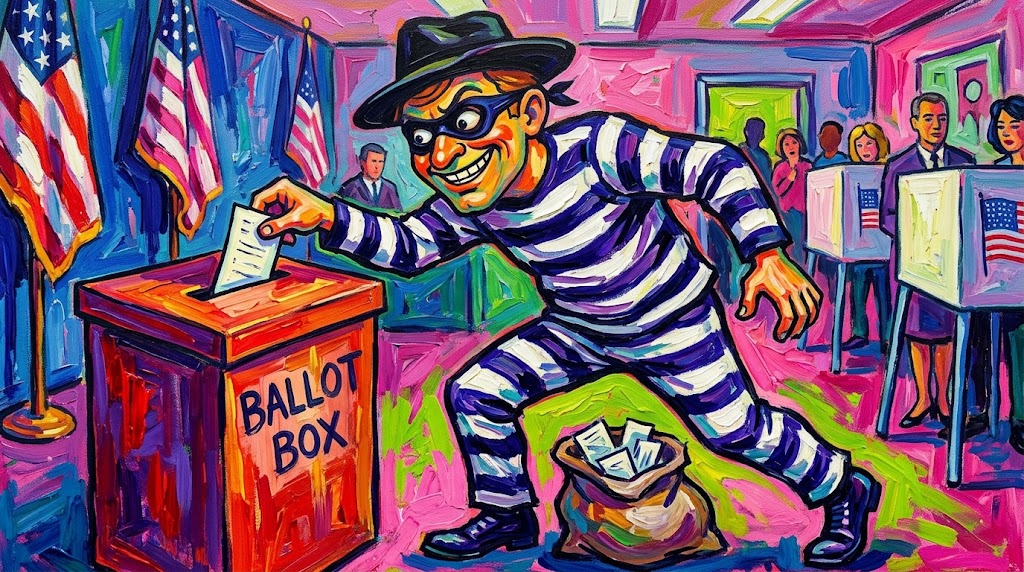
- Electoral Fraud (or Election Administration Fraud): Systematic or coordinated attempts to alter an election's outcome. Examples include ballot box stuffing, illegal alteration of vote totals by election workers, vote buying, or coordinated schemes to forge and harvest absentee ballots.
Independent research organizations like the Brennan Center for Justice and educational databases like Ballotpedia emphasize that legal definitions require criminal intent. Administrative blunders—such as an election clerk misplacing an envelope, a voter signing their spouse's ballot by mistake, or a citizen misunderstanding changing rules after completing a felony sentence—are mistakes or procedural failures, not deliberate fraudulent conspiracies.
2. Methods: How Election Crimes Are Committed
Historically and in modern investigations, election fraud schemes usually target specific weak points in the voting process.
A. Absentee and Mail-In Ballot Fraud
Absentee and mail-in ballots travel outside of controlled polling precincts, creating opportunities for bad actors if verification steps are weak.
- Illegal Ballot Harvesting and Alteration: Unlawful operatives collect absentee ballots from voters, sometimes forging signatures, altering the selections on the ballot, or discarding ballots cast for an opponent. A prominent modern example occurred during the 2018 congressional race in North Carolina’s 9th District, where a political operative ran an illegal absentee-collection operation, leading state election officials to void the contest and order a fresh election.
- Interpersonal Coercion or Vote Buying: Operatives offer cash, favors, or liquor to voters in exchange for completing an absentee ballot or turning it over blank with a signature.
B. In-Person Impersonation
Voter impersonation happens when someone enters a polling site claiming to be another registered individual. While frequently cited in debates over voter ID laws, documented examples of in-person impersonation are virtually nonexistent. The logistics make it exceptionally inefficient: an individual must risk felony charges, prison time, and significant fines to produce a single additional vote.
C. Internal Administrative Tampering and Ballot Stuffing
Rather than changing individual ballots on the street, corrupt officials historically manipulated results from within.
- Tally Tampering: Before electronic audit systems existed, precinct workers could add votes directly to tally sheets or secretly deposit pre-marked ballots into boxes.
- Machine Tampering: In the modern era, voting systems use secure operating environments, logic and accuracy pre-tests, dual-custody access controls, and air-gapped equipment to protect counts. Allegations of altered digital tabulator software have been repeatedly investigated by state and federal security agencies, which consistently verify paper ballot audit trails to ensure machines reflect cast ballots.
D. Registration Fraud
Canvassers paid per completed voter registration form sometimes turn in applications featuring fake names, celebrity pseudonyms, or invented addresses to meet job quotas. While submitting fraudulent forms is a serious crime, fake registrations rarely translate into fraudulent votes; election offices compare forms against government records before issuing ballots or adding names to official poll books.
3. How Often Does Election Fraud Happen?
Academic and institutional studies agree: proven election fraud is vanishingly rare.
Brookings Institution
State-level election audits spanning decades | Documented fraud rates consistently fall below 0.0001% (less than 1 case per 1 million ballots). |
Heritage Foundation Database
Comprehensive review of prosecuted cases over multiple decades | Documents approximately 1,500 proven criminal cases across the entire country over 40+ years, representing a microscopic fraction of billions of votes cast. |
Brennan Center for Justice
"The Truth About Voter Fraud" national review found incident rates between 0.0003% and 0.0025%, noting that an American is statistically more likely to be struck by lightning than impersonate a voter.
Government Task Forces (e.g., Iowa, Wisconsin)
Multi-year statewide investigations: Audits uncovered dozens of total administrative errors or confusion over felon eligibility, but no coordinated fraud rings.
Because American elections are decentralized—administered by thousands of local municipal, county, and state jurisdictions rather than a single central office—carrying out widespread fraud to swing statewide or national elections would require corrupting hundreds of independent officials across multiple political parties without leaving a paper trace.
4. Detection: How Often Are Perpetrators Caught?
Perpetrators who attempt serious fraud operations face high detection rates. Modern elections utilize overlapping, redundant safeguards:
1. Voter Roll Cross-Checks: States routinely match registry rolls against death records, motor vehicle databases, change-of-address files, and multi-state clearinghouses to spot duplicate records.
2. Signature Verification and Barcode Tracking: Mail-in envelopes feature individualized barcodes and undergo signature verification against government records before processing. Attempting to harvest or fabricate hundreds of envelopes produces clear statistical anomalies that flag review boards.
3. Paper Audit Trails: The overwhelming majority of U.S. jurisdictions mandate paper ballots or voter-verified paper audit trails (VVPAT) that can be hand-counted during post-election risk-limiting audits to confirm machine accuracy.
4. Bipartisan Staffing and Dual Custody: In most jurisdictions, key actions—handling ballot boxes, verifying signatures, transporting records, and operating tabulation software—must be carried out by pairs of workers from opposing political parties.
When individuals or political operatives attempt to manipulate ballots, the statistical spikes and physical paper inconsistencies stand out quickly, triggering criminal referrals and felony prosecutions.
5. Has Fraud Ever Changed Election Outcomes?
In high-profile national contests (such as modern U.S. presidential races), verifiable voter fraud has never been shown to alter the outcome. The scale of votes required to change a statewide or national tally is far too large to conceal.
However, in small-scale municipal, county, or legislative races decided by razor-thin margins, isolated fraud schemes have occasionally impacted or overturned an initial result:
- 1948 U.S. Senate Primary (Texas): In the famous "Box 13" scandal, Lyndon B. Johnson won the Democratic primary by just 87 votes after officials in Jim Wells County added 202 unvoted names to the ledger six days after the polls closed.
- 1994 Pennsylvania Senate District 2: A federal judge tossed out the results of a special state senate election and awarded the seat to the challenger after uncovering a coordinated conspiracy by the incumbent campaign to forge and steal hundreds of absentee ballots.
- 2018 North Carolina 9th Congressional District: Following evidence of illegal ballot harvesting and forgery orchestrated by a political consultant, the bipartisan State Board of Elections refused to certify the result and ordered a complete re-run of the election.
- Local Mayoral and Commission Races: In tiny rural or city jurisdictions where contests are decided by single-digit vote differences, individual ballot manipulation efforts have led judges to void tallies and order new elections.
6. Official Resources and Verification
The strongest safeguard in democratic elections is public transparency and verified information. Citizens interested in learning about election safeguards, auditing procedures, or local voting logistics should consult nonpartisan resources and their local election officials:
- Check the U.S. Election Assistance Commission (EAC) for national standards, voting technology certifications, and post-election audit guides.
- Review the National Conference of State Legislatures (NCSL) for comparative state election laws, mail-in verification rules, and audit requirements.
- Visit your official Secretary of State or county elections division website to review the security processes, public testing dates, and canvas rules specific to your jurisdiction.
Bibliography
1. Brennan Center for Justice. (2017). Debunking the Voter Fraud Myth. New York University School of Law. brennancenter.org
2. Brookings Institution. (2024). How widespread is election fraud in the United States? Not very. Brookings Center for Technology Innovation. brookings.edu
3. Ballotpedia. (2024). Electoral Fraud: Concepts, Classifications, and Legal Frameworks. ballotpedia.org
4. Caro, Robert A. (1990). Means of Ascent: The Years of Lyndon Johnson. Vintage Books. (Details regarding the 1948 Jim Wells County Box 13 primary contest).
5. SciLine. (2024). What research tells us about voter fraud and election administration. American Association for the Advancement of Science. sciline.org
6. U.S. Cybersecurity and Infrastructure Security Agency (CISA). (2022). Election Security Rumor vs. Reality. U.S. Department of Homeland Security.

Comments
No published comments yet. Start the conversation.